
IVF – ICSI and Preimplantation Genetic Diagnosis
At our center, we combine the most advanced In Vitro Fertilization (IVF) techniques with genetic analysis of the embryos to offer you the best guarantee of success. IVF with Sperm Microinjection (ICSI) together with Preimplantation Genetic Testing for Aneuploidy (PGT-A) is a powerful strategy to increase pregnancy rates and reduce the risk of certain chromosomal abnormalities.
This comprehensive approach allows us not only to facilitate fertilization, but also to select the embryos with the greatest potential for implantation and healthy development before transferring them to the uterus.
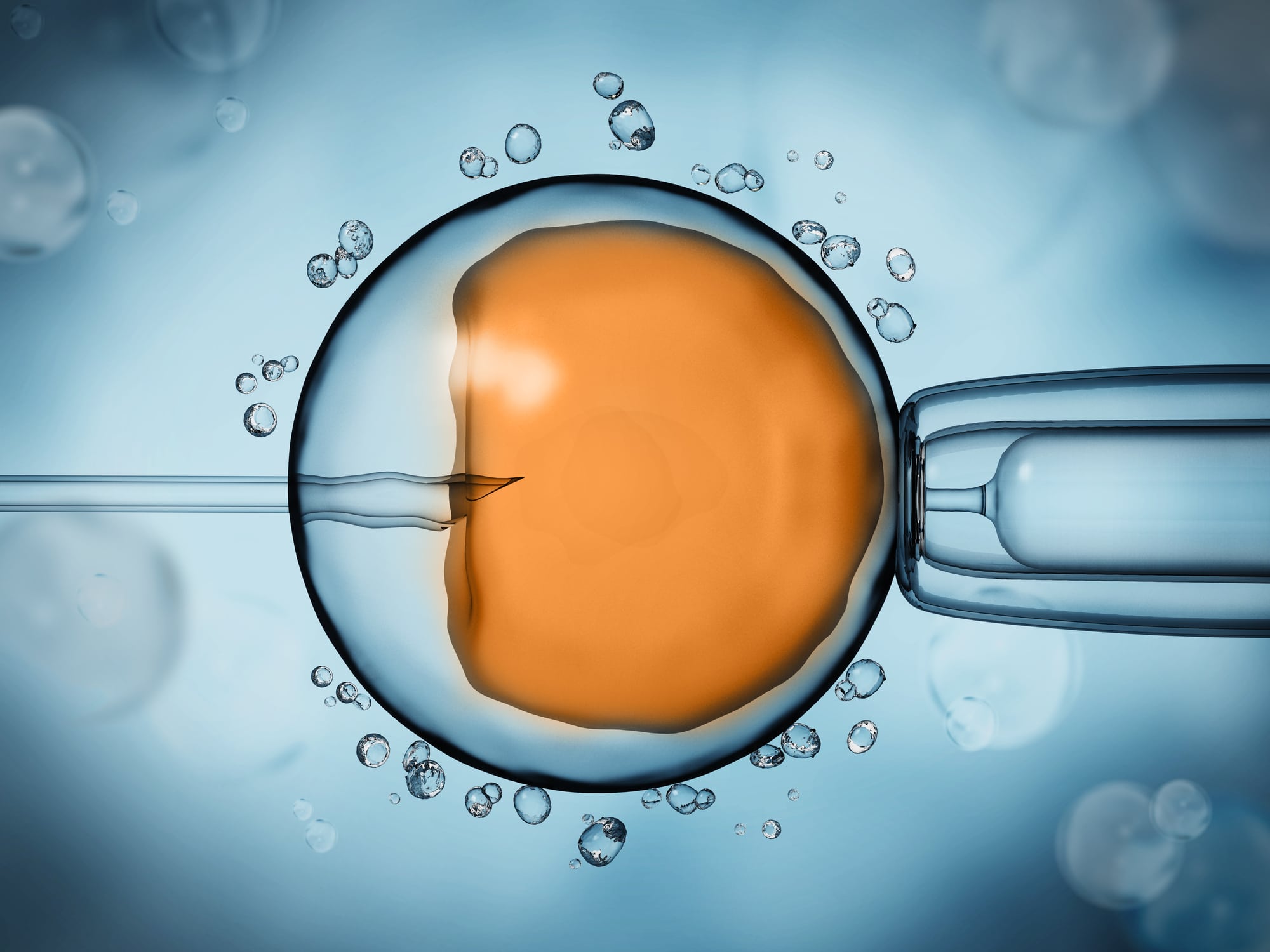
What is PGT-A and why is it combined with IVF-ICSI?
Preimplantation Genetic Diagnosis for Aneuploidy (PGT-A) is an analysis performed on embryos obtained through IVF before their transfer to the uterus. Its objective is to identify aneuploidies, which are alterations in the number of chromosomes (having too many or too few chromosomes).
Aneuploidies are one of the main causes of:
- Embryo implantation failure.
- Miscarriages (especially in the first trimester).
- Birth of babies with chromosomal syndromes (such as Down’s, Patau’s or Edwards’ Syndrome).
Why is ICSI essential for PGT-A?
To perform PGT-A reliably, it is essential to use the ICSI technique (microinjection of a single sperm into the egg). In conventional IVF, many sperm can adhere to the outer layer of the egg, even if only one fertilizes the egg. These attached sperm could contaminate the cell sample that is biopsied from the embryo for genetic analysis, leading to erroneous results. ICSI ensures that only the genetic material from the sperm that fertilized the egg is present, guaranteeing maximum accuracy of the PGT-A analysis.
For whom is IVF-ICSI treatment with PGT-A indicated?
Although it can be considered in other cases, PGT-A is especially recommended in situations where the risk of embryonic aneuploidy is higher or where the aim is to optimize the transfer possibilities to the maximum:
Our team in Donostia will offer you personalized genetic and medical advice to assess whether PGT-A is the right option for your case.
The IVF-ICSI Process with PGT-A
The process combines the steps of IVF-ICSI with additional stages of genetic analysis:
- Ovarian Stimulation and Follicular Puncture: Same as in a standard IVF cycle, to obtain the eggs.
- Sperm Preparation and ICSI Fertilization: Intracytoplasmic microinjection is performed to ensure correct fertilization and avoid contamination for subsequent genetic analysis.
- Embryo Culture to Blastocyst Stage: Embryos are cultured in our laboratory in Donostia for 5 to 6 days until they reach the blastocyst stage, which is when the biopsy can be performed in the safest and most efficient way.
- Embryo Biopsy: Our expert embryologists carefully remove a few cells from the trophectoderm (the outer layer of the blastocyst that will give rise to the placenta) from each viable embryo.
- Embryo Vitrification: Biopsied embryos are frozen by vitrification while awaiting the results of the genetic analysis. This allows the uterus to be optimally prepared for transfer.
- PGT-A Genetic Analysis: The biopsied cells are genetically analyzed to determine their chromosomal endowment (whether they are euploid -normal- or aneuploid -abnormal-).
- Embryo Selection and Endometrial Preparation: Once the results are received, a euploid embryo is selected for transfer. Simultaneously, the patient’s endometrium is prepared to ensure that it is receptive.
- Devitrified Embryo Transfer (Cryotransfer): The selected euploid embryo is devitrified and transferred to the maternal uterus. Generally a single embryo is transferred to reduce risks.
- Pregnancy Test: About 10-12 days after the transfer, a pregnancy test is performed.
Important Considerations for PGT-A
It is essential to understand that PGT-A selects chromosomally normal embryos, but does not “create” or “repair” them. The success of the cycle will depend on obtaining euploid embryos, which is closely related to maternal age and other individual factors. There is a possibility that no embryos are euploid and the transfer cannot be performed. Our team will explain in detail the personalized prognosis in your case.
Start Your Way with Genetic Security
If you are considering IVF and want to increase your chances of having a healthy baby, the combination of IVF-ICSI with PGT-A at Masfiv may be your best option. Contact us for an informative consultation and genetic counseling.